
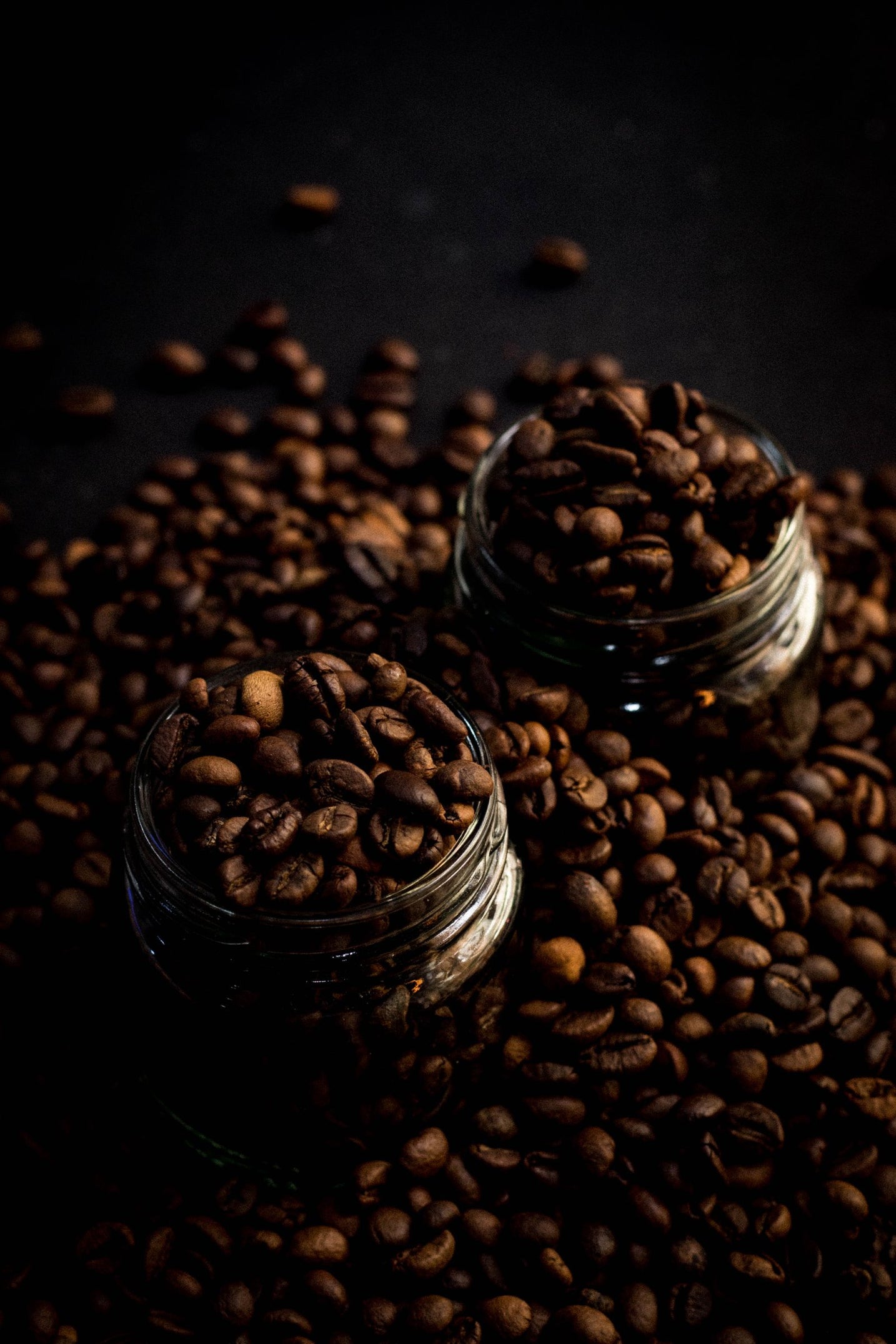
The short answer: store your working bag whole, in its own airtight container, somewhere dark, cool, and dry, away from the stovetop. Air, heat, moisture, and light are what stale coffee, in that order of nuisance. For anything you won't finish in about three weeks, the freezer beats the counter. Freeze it in small, sealed, single-use portions.
That advice sounds simple, and most of it is. The part people argue about is the freezer, so this piece leans on two peer-reviewed studies and one widely watched home guide to settle it. We will tell you where the science is solid and where it stops, and give you a routine you can run without buying anything fancy.
Where should you store coffee beans?
Pick a spot that is dark, room temperature or cooler, and dry. A closed cupboard away from the oven and out of direct sun does the job. Keep beans out of clear glass jars on the counter, because light and heat both speed up staling.
The reason comes down to four things working against your coffee: oxygen, heat, moisture, and light. Oxygen oxidizes the oils and aromatic compounds that make good coffee taste like anything. Heat speeds every one of those reactions. Moisture starts to brew the surface of the grounds before you do and invites the beans to take on off-flavors. Roasted coffee is also porous and grabs nearby smells, so the cupboard next to your fish sauce is a poor choice.
Whole beans hold up far better than pre-ground. When you grind, you multiply the surface area exposed to air by a huge factor, and staling accelerates. Grind per brew and you keep most of that freshness locked inside the bean until the last minute. If you want the mechanics of why surface area changes the cup, our explainer on extraction versus strength covers the same physics from the brewing side.
Does an airtight container actually help?
Yes, and the bag your coffee came in is often already good. Most specialty roasters ship beans in a bag with a one-way valve, which lets the coffee release carbon dioxide without letting oxygen back in. Roll it down, clip it, and it works well for a working supply.
If you decant, use a container with a real seal. Opaque is better than clear. A gasket lid or a vacuum canister buys you a little more time by limiting the oxygen sitting against the beans. None of this stops staling, it slows it. The goal for your daily bag is to finish it while it still tastes like the roaster intended, usually within two to four weeks of the roast date. Buy in amounts that match how fast you drink it, and the storage problem mostly solves itself.
Should you freeze coffee beans?
For long-term storage, freezing wins, and there is science on both the flavor and the grinding side.
On flavor, a 2024 study in the journal Foods by Nikolina Gantner and colleagues tracked what happens to a coffee's volatile aroma compounds and taste when stored for a month. Beans held cold at about 5°C kept their aromatic profile close to fresh, while beans left at room temperature (around 20°C) drifted, gaining earthy, sharp, and smoky notes and losing chocolate and sweetness (DOI 10.3390/foods13243995). Colder storage preserved the good stuff. A freezer sits far below the 5°C they tested, which slows those staling reactions even further.
On grinding, a 2016 Scientific Reports paper from Erol Uman, Christopher Hendon, and colleagues at the University of Bath and MIT found that colder beans shatter into smaller, more uniform particles. Chilling beans produced a narrower particle size distribution and a lower average size (DOI 10.1038/srep24483). More uniform grounds extract more evenly, which is a real quality gain, and it is why many competitors grind straight from frozen. Their beans went as cold as liquid nitrogen, so treat the effect at freezer temperatures as smaller but pointing the same direction.
Here is the honest catch the lab results do not cover. The refrigerator is a different animal from the freezer. A home fridge cycles in humidity every time you open the door, and coffee readily absorbs food odors. The Foods study kept sealed samples at a steady 5°C, which is not the same as a bag you open and reseal in a working fridge each morning. So our verdict splits: room-temperature airtight for the bag you are drinking now, freezer for anything longer, and skip the fridge for daily storage.
How do you freeze coffee the right way?
The method that home guides converged on, and the one James Hoffmann demonstrates in his widely shared 'Should you freeze coffee?' video, is portioning (watch it here). The rules are short.
Divide the beans into small portions, ideally a single day or single dose each, so you only ever thaw what you will brew. Seal each portion airtight, pressing out as much air as you can, using a zip bag, a vacuum-sealed pouch, or small jars. Freeze. When you want coffee, take out one portion and grind it straight from frozen. Do not open a portion, use half, and refreeze it, because every thaw cycle lets condensation settle on the beans. The single-use portion is the whole trick: it means the beans never sit through the moisture swings that give freezing a bad reputation.
Grinding from frozen is not only allowed, it is a small upgrade thanks to that uniformity effect. A short rest on the counter for the grounds to shed any surface condensation is fine, though many people grind and brew immediately with good results.
How long do coffee beans stay fresh?
Roughly speaking: a sealed bag of whole beans is at its best for about a month after roasting, and stays good for a few months. Once opened and stored at room temperature, aim to finish it within two to four weeks. Ground coffee starts fading within days, which is why you grind per brew. Frozen and properly portioned, whole beans hold much of their character for several months or more.
None of these are hard cliffs. Coffee does not spoil in a way that will hurt you, it just gets flat and dull. If your cup has gone lifeless, storage is one suspect, and your ratio or grind may be another. Our guide to coffee-to-water ratios and the walkthrough on dialing in espresso can help you tell the difference. And if a bag tastes sharp and gassy rather than flat, the problem may be the opposite of old age, which we cover in the companion piece on resting coffee that is too fresh.
Frequently asked questions
Can you store coffee in the fridge?
For daily storage, we would not. A steady, sealed 5°C preserves aroma in a lab, but a working fridge adds humidity swings and food odors that coffee soaks up. Use the freezer for long-term and the cupboard for your current bag.
Do you have to thaw frozen coffee before grinding?
No. Grinding straight from frozen works and can even produce slightly more uniform grounds. Just keep each portion sealed until the moment you grind, and only take out what you will brew.
Are the original bags with valves good enough?
For your working supply, usually yes. The one-way valve vents carbon dioxide while keeping oxygen out. Squeeze out the extra air, roll the bag down, and seal the clip. Decant into an airtight, opaque container only if you prefer it.
Does whole bean really last longer than ground?
By a wide margin. Grinding exposes far more surface area to oxygen, so ground coffee stales in days while whole beans hold for weeks to months. Grind per brew whenever you can.
The shoulders this stands on
This piece distills and reconciles the work of others. Credit where it is due:
- Nikolina Gantner et al., 'Effect of Temperature and Storage on Coffee's Volatile Compound Profile and Sensory Characteristics,' Foods (2024), DOI 10.3390/foods13243995, open access.
- Erol Uman, Christopher H. Hendon, Maxwell Colonna-Dashwood et al., 'The effect of bean origin and temperature on grinding roasted coffee,' Scientific Reports (2016), University of Bath and MIT, DOI 10.1038/srep24483, open access.
- James Hoffmann, 'Should you freeze coffee?' (YouTube), for popularizing the single-dose freezing method at home.
If you want beans worth storing well, our current coffee ships with a roast date on every bag. And for clear ideas like this in your inbox once a month, join The Small Hours. No spam, no fake urgency, just the good part.