
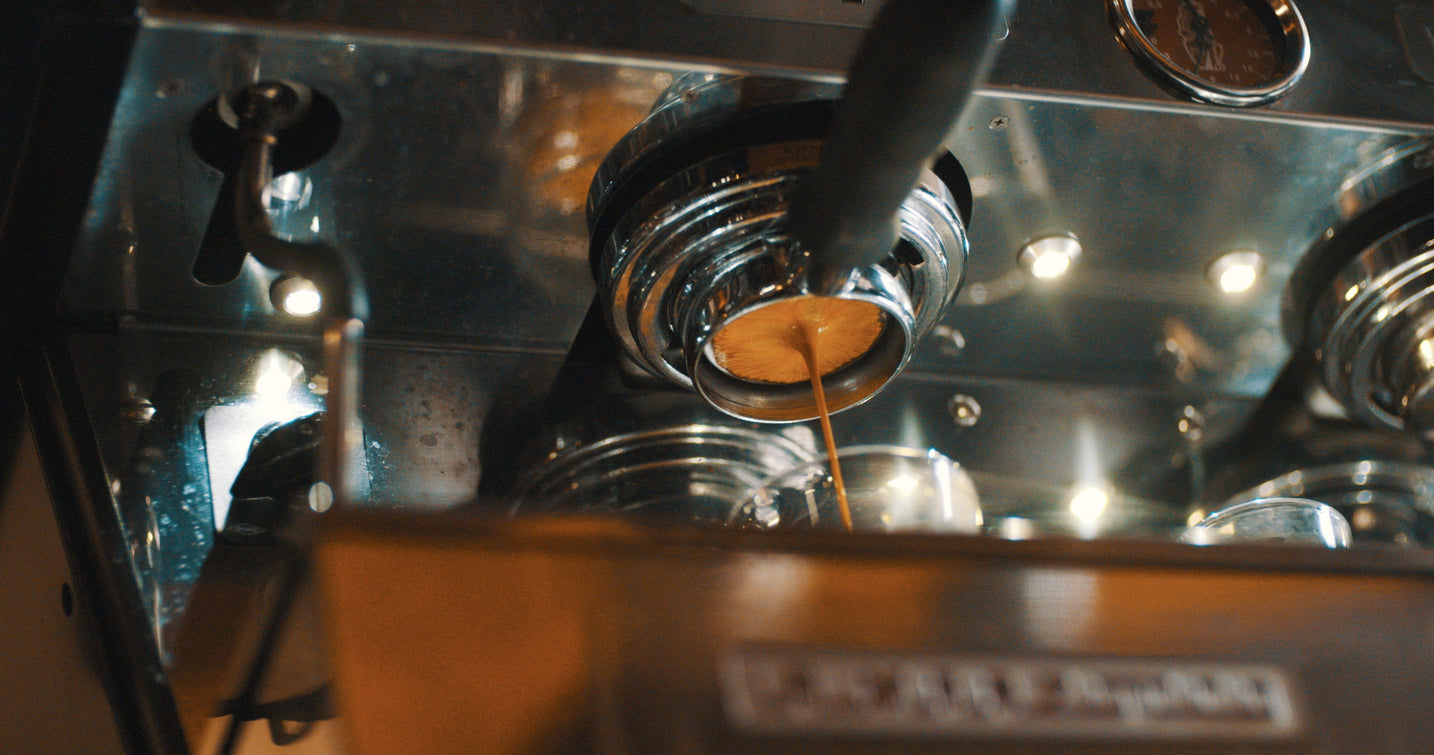
Quick answer: Dialing in means adjusting your grinder until a fixed dose of coffee reaches a fixed yield — a 1:2 ratio, 18 grams in, 36 grams out — in roughly 25 to 32 seconds and tastes balanced. Sour or fast? Grind finer. Bitter or slow? Grind coarser. Change the grind and nothing else, and pull again. Most bags come together in three or four shots once you work in that order.
Written from our bar. The recipe below is the one we run every morning on a La Marzocco Linea Micra and a Mazzer Philos, and it transfers to any machine with a portafilter.

Start from a recipe, not from vibes
Espresso has too many variables to freelance. Lock everything except one, and the one you leave loose should be grind size.
| Variable | Starting point | Locked? |
|---|---|---|
| Dose (ground coffee in) | 18 g, or whatever your basket is rated for | Locked |
| Yield (liquid espresso out) | 36 g, a 1:2 ratio | Locked |
| Time | 25 to 32 seconds is the healthy zone | Observed, not chased |
| Temperature | 200°F / 93°C if your machine adjusts | Locked |
| Grind size | Middle of your grinder's espresso range | This is the dial |
Two clarifications people pay for in wasted coffee. First, dose and yield are weights, not volumes. Crema lies and shot glasses lie with it, so the scale decides when the shot ends. Second, time is a diagnostic, not a target. A shot that hits 36 grams in 20 seconds is telling you the grind is coarse. You fix that with the grinder, not by cutting the shot short.
The loop: one change per shot
- Grind 18 g, level the grounds, tamp flat. If the grounds look clumpy, stir them with a needle tool first. Distribution problems disguise themselves as grind problems.
- Start the shot and the timer together. Stop at 36 g out.
- Note the time, then taste it. Let it cool for a minute first; scalding coffee all tastes the same.
- Sour, sharp, thin, finished fast: grind finer. Bitter, harsh, drying, dragged on past 35 seconds: grind coarser. Move one or two clicks, or the smallest step your grinder allows.
- Pull again with everything else identical.
- Stop when the shot lands in the window and tastes sweet with no wince. That is dialed in, for this bag, at this roast age. Write the setting down.
The dial-in chart
| What you taste | What the shot did | The one change |
|---|---|---|
| Sour, sharp, thin body | Ran fast, pale color early | Grind finer |
| Bitter, harsh, dry finish | Ran slow, dark drips at the end | Grind coarser |
| Sour and weak | Fast and watery | Grind finer; if already choking, raise the dose 0.5 g |
| Bitter and hollow | Slow to first drip, then trickled | Grind coarser; check for channeling |
| Sour edge and bitter finish at once | Sprayed or ran unevenly | Fix distribution before touching the grinder |
| Sweet, heavy, no wince | Landed 25 to 32 s | Nothing. Stop fiddling. |
Sour means the water left before it finished extracting. Bitter means it stayed too long, or the coffee and machine were dirty, which reads as bitterness no grinder setting will fix. Both taste failures have their own full write-ups: sour espresso, in order and bitter espresso, in order.
Why shots fight you anyway
The beans are the wrong age. Very fresh, gassy coffee can make shots erratic; old coffee can taste flat. Follow the roaster's resting advice, and use about 7 to 14 days after roast as a practical espresso starting point rather than a deadline. Some coffees need longer. Our resting guide explains why roast level alone does not set the clock.
The puck is channeling. Water is lazy and takes the easiest path. If the grounds are clumped or the basket is unevenly packed, one crack does all the flowing, and you get sour and bitter in the same cup. A 30-second stir with a fine needle tool (WDT, in forum language) before tamping fixes more bad shots than any accessory we have tested. Clive Coffee's channeling explainer is a good deeper read.
Two variables moved at once. New bag and a new basket on the same morning means you learn nothing from the shot. Change one thing. It is slower for exactly one day.
The dose is wandering. If you are scooping instead of weighing, the dose moves shot to shot and drags flow time with it. A scale that reads 0.1 g ends this; our notes on the $55 Timemore cover what that money buys.

What this costs in coffee
A 12 oz bag is 340 grams, about 18 double shots. A disciplined dial-in burns 3 to 5 of them, roughly $6 of a $24 bag, once. An undisciplined one, changing grind and dose and temperature together and re-tasting at random, can burn half the bag and end where it started. The method is the savings.
Gear, honestly
The grinder does more for your espresso than the machine, the basket, the tamper, and the water combined, and we lay out that argument with numbers in Upgrade the grinder first. Beyond that: a 0.1 g scale is mandatory, a needle tool costs less than a bag of coffee, and we sell some of these things, so read us skeptically.
Stuck on a specific bag? Email the bar: hello@drinksmallhours.com. Include dose, yield, time, and roast date, and we will answer.
Sources worth your time
espressoaf's beginner guide · Barista Hustle's Espresso Compass · Clive Coffee on making espresso