
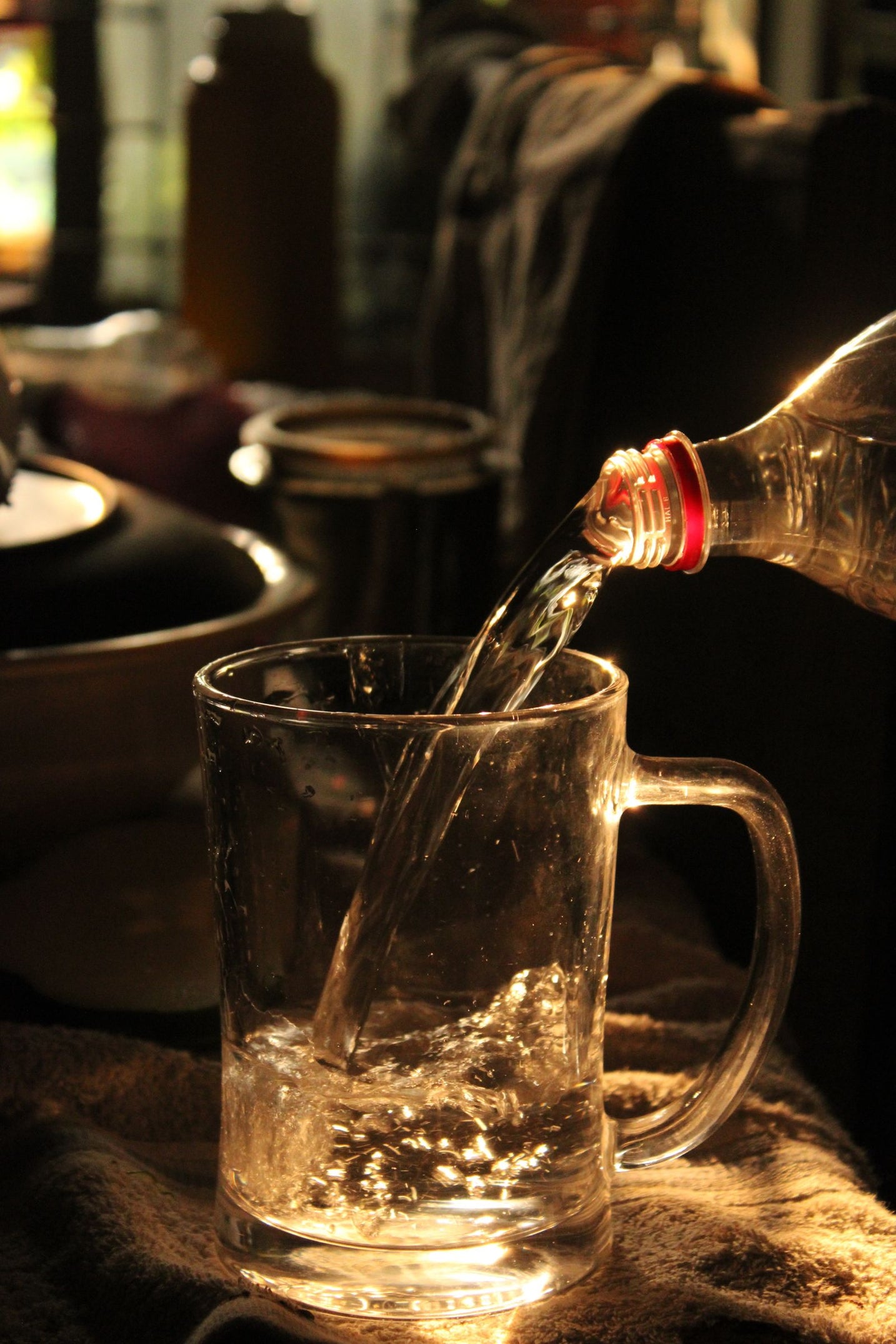
The short answer: water is about 98 percent of your cup, and its mineral content decides how much flavor leaves the grounds. Aim for moderate minerals and low alkalinity. A carbon filter fixes most tap water, and a mineral packet stirred into distilled water gives you a repeatable recipe. No chemistry degree required.
You bought better beans. You upgraded the grinder. The cup still tastes muted, or sharp in a way the roaster's notes never promised. The ingredient you have not touched is the one that makes up nearly all of the drink. Second Look is our coffee science series in the Journal. Here we examine brew water: what the research measured, which numbers on a label matter, and the cheapest path to water that lets your coffee taste like itself.
Why does water change how coffee tastes?
Coffee brewing is extraction, and minerals do the pulling. In 2014, Maxwell Colonna-Dashwood and Christopher Hendon at the University of Bath published "The Role of Dissolved Cations in Coffee Extraction" in the Journal of Agricultural and Food Chemistry. Their modeling showed that magnesium and calcium in water bind to flavor compounds in the coffee bed and carry them into your cup, with magnesium a touch better at grabbing the bright, fruity ones. Strip the minerals out and extraction drops: water with nothing in it leaves flavor stranded in the grounds.
The second lever is alkalinity, which is the bicarbonate buffer that neutralizes acid. A little buffer rounds off harshness. A lot of buffer erases the acidity that makes a washed Ethiopian taste like anything at all. If your coffee tastes flat no matter what you do, high alkalinity is a prime suspect. We covered the extraction side of this in extraction vs. strength; water sets the ceiling on that whole system.
What do the numbers on a water label mean?
Three numbers cover most of it, and the Specialty Coffee Association publishes targets for each in its water standard (the research hub at sca.coffee/research is the starting point). Translated to plain words:
- TDS (total dissolved solids): everything dissolved in the water, measured in parts per million. The SCA standard centers on roughly 150 ppm, with an acceptable range of about 75 to 250. Below that range coffee under-extracts; far above it, the cup goes dull and your kettle grows a crust.
- Hardness: the calcium and magnesium share of TDS. This is the part doing the extracting, per the Bath paper above.
- Alkalinity: the buffer. The SCA target sits near 40 ppm. This number, more than hardness, decides whether acidity survives to the cup.
Our verdict: you do not need to hit these numbers. You need to know whether your water is wildly outside them, because that is the case where fixing water beats any technique change you could make.
Is your tap water the problem?
Usually not, and we are not here to tell you your kitchen is wrong. Municipal tap water has one near-universal flaw for coffee: chlorine or chloramine, which you can taste as a faint swimming-pool note. A carbon filter pitcher removes it, and that single move improves more home coffee than any gadget we stock.
The exceptions run in both directions. Very hard water (common across the American Southwest and Midwest) mutes brightness and scales up espresso machines. Very soft water (the Pacific Northwest, much of New England) can leave even good beans tasting thin and sour because there is not enough mineral content to extract with. A ten-dollar strip test kit tells you which world you live in. That is thirty seconds of chemistry, and it is all this article will ask of you.
What is the easiest way to get better water?
Three tiers, all of them respectable. Pick the one that matches your patience.
- Filter what you have. A carbon pitcher on decent tap water gets you most of the way for a few dollars a month. This is the right answer for more people than the internet admits.
- Buy water with friendly numbers. Spring water in the 50 to 150 ppm TDS range brews well; the label or the brand's website lists it. Skip two traps: heavy European mineral waters (built for drinking, not brewing) and plain distilled or reverse-osmosis water on its own, which under-extracts for the reasons the Bath paper explains.
- Build your water. Mineral concentrates and packets (Third Wave Water and Lotus are the names you will see) turn a jug of distilled water into repeatable brew water in a minute. The community classic is the rpavlis recipe: a small measure of potassium bicarbonate in distilled water, beloved for espresso machines because it cannot form scale. The Home-Barista thread "Easiest way to make rpavlis water?" walks through it, and Jim Schulman's Insanely Long Water FAQ is the canonical deep end when you want the full chemistry after all.
For a video walkthrough of this whole landscape, Lance Hedrick's ultimate guide to water for coffee is the most complete tour on YouTube. Disclosure: Hedrick has a commercial relationship with Lotus, one of the mineral brands named above, and his conclusions still hold up against the independent sources here.
Does espresso need different water than filter coffee?
The taste rules are identical. The stakes are not, because an espresso machine boils your water choices inside several hundred dollars of plumbing. High hardness builds scale on heating elements; high chloride corrodes them. That is why low-scale recipes like rpavlis water and the packet products earn their keep with machine owners. We wrote a machine-focused companion piece, water for espresso machines, and a guide to when descaling helps and when it hurts. Short version: pick your water once, and half the maintenance schedule takes care of itself.
The shoulders this stands on
- Maxwell Colonna-Dashwood and Christopher Hendon, University of Bath: "The Role of Dissolved Cations in Coffee Extraction," Journal of Agricultural and Food Chemistry, 2014. The paper behind every magnesium claim in this piece.
- Jim Schulman: the Insanely Long Water FAQ on Home-Barista, the community's foundational water text.
- The Home-Barista community: the rpavlis water recipe, named for the chemist and forum member who shared it.
- The Specialty Coffee Association: published water standards, via the SCA research hub.
- Lance Hedrick: "Ultimate Guide to Water for Coffee" on YouTube. Disclosure: Hedrick has ties to Lotus, a mineral-additive brand mentioned here.
Questions we hear across the counter
Can I brew coffee with distilled water?
On its own, we would not. Distilled water has no minerals to extract with, so cups come out hollow and sour-leaning. As a base for a mineral packet or the rpavlis recipe, distilled water is the best starting point there is: a blank page you can write the right numbers on.
Is bottled water better than tap water for coffee?
Only if its numbers are better than your tap's, and carbon-filtered tap water beats random bottled water more often than you would guess. Check the mineral analysis on the label against the ranges above before paying bottled prices.
What TDS should coffee water have?
The SCA standard centers near 150 ppm with an acceptable band of roughly 75 to 250. Treat it as a zone, not a bullseye. Composition matters as much as the total, which is the core finding of the Bath research: 100 ppm rich in magnesium brews differently than 100 ppm of mostly sodium.
Will better water make a bigger difference than a better grinder?
If your water is inside the normal range, no: the grinder wins, and we made that case in upgrade the grinder first. If your water is far outside the range, water wins, and it costs almost nothing to fix. Run the strip test before you spend grinder money.
If this saved your morning cup, The Small Hours newsletter sends useful brew notes and honest verdicts once a month: join free here. And good water deserves beans roasted this month, not last year: the current shelf is here.